

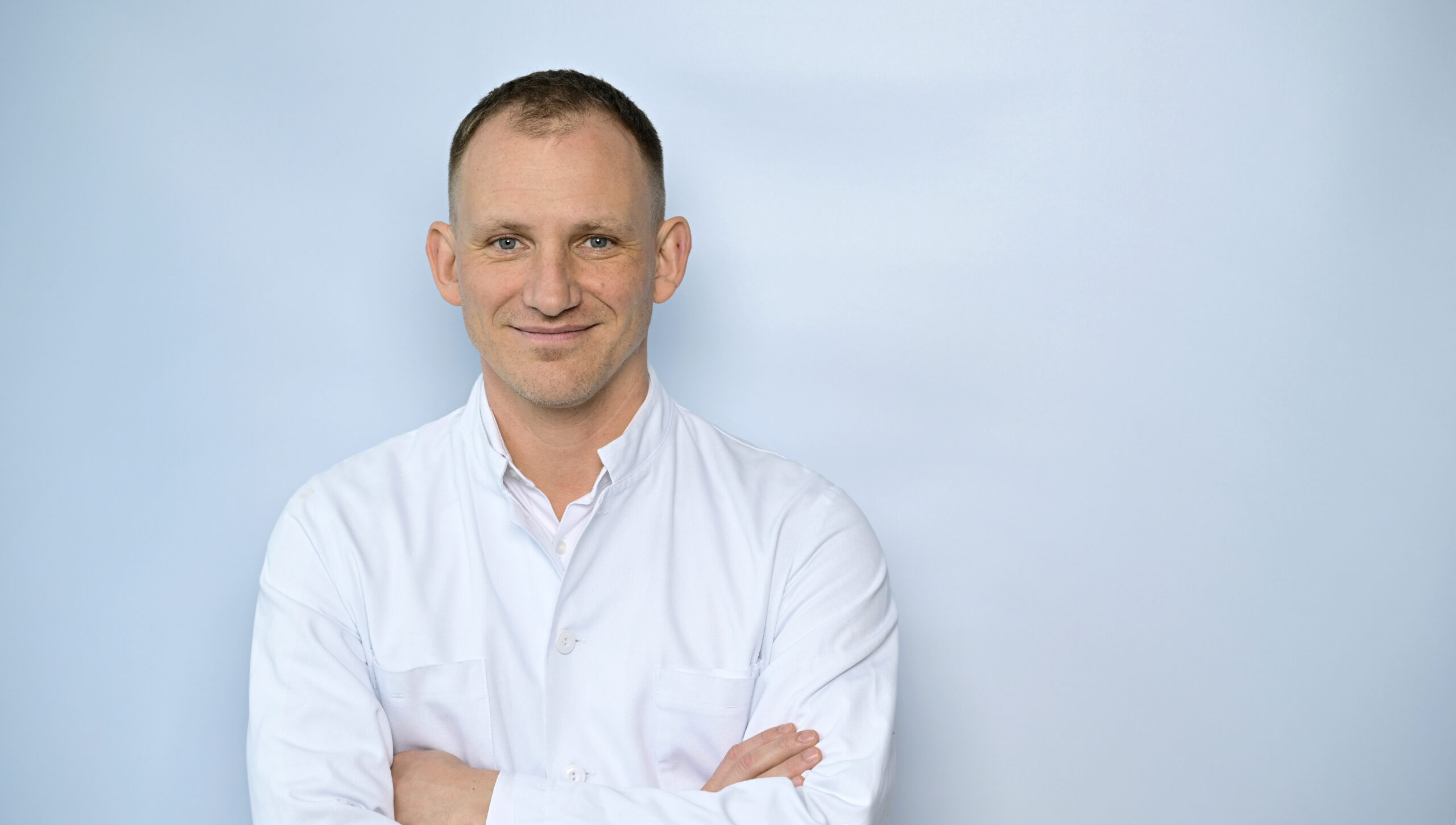
Dr. med. Nils Proksch is responsible for the medical care of the players at the MSC Hamburg Ladies Open.
Photo: Asclepius.
From May 2026, Dr. Nils Proksch will serve as Chief Physician of the Department of Trauma Surgery, Orthopaedics and Sports Orthopaedics at Asklepios Klinik St. Georg. Together with his team, he will take on the medical care of the professional female athletes at the tournament in Hamburg's Rothenbaum – an event where peak athletic performance and injury risk go hand in hand, as Proksch reports in an interview.
Dr. Proksch, as chief physician, you usually lead a department with established structures. At Rothenbaum, you are looking after the elite of women's tennis for the first time. What does that mean for your work?
Working at the Center Court is naturally different from our day-to-day clinic work – during the tournament, we’re literally working under competitive conditions. However, in trauma surgery, we’re accustomed to constantly being faced with new situations and having to make quick decisions. And we already have experience from other sporting events, having provided medical care for the athletes at the UFC Fight Night – an international martial arts event – among others. While tennis is a new discipline in our portfolio, we’re very much looking forward to supporting the event and are bringing comprehensive expertise with us.
What's special about the care of professional female athletes?
Tennis is one of the so-called stop-start sports. This means that the movements constantly alternate between explosive starting and accelerating, abrupt braking, and quick turns and changes of direction. For active participants, this means continuous, short, intense strain peaks, which primarily result in an increased risk of injury to the tendons, ligaments, knees, and ankles. It is precisely these areas that we focus on from a medical perspective – even though the athletes naturally possess excellent physical condition and are therefore well-prepared.
For laypeople, the famous „tennis elbow“ is a term – an injury that can sometimes be sustained while gardening or working at the computer. Do professional athletes also struggle with this – as the name suggests?
In principle, this is possible, as the elbow joint is particularly stressed during tennis. However, professional female athletes, as mentioned, have a completely different physique from amateurs: their musculature is specifically built up and trained – they also benefit from stretching and loosening exercises. Patients who come to our clinic due to classic elbow overload differ from female athletes in this respect. One way or another, when experiencing symptoms, structural damage such as rotational instability must first be ruled out. Subsequently, tennis elbow is usually treated conservatively – surgery is considered a last resort to alleviate symptoms and ideally resolve them completely.
Away from tennis elbow – what are the most common injuries that plague tennis players?
In the amateur sector, problems with the Achilles tendon and the knee are extremely common. Shoulder injuries also play a role. Ultimately, all injuries result from the high stress that tennis places on joints and ligaments. It is also noticeable that many injuries develop gradually. This underscores how important prevention is – especially in the amateur sector.
You don't provide medical care at Centre Court alone but with an entire team. Give us an exclusive insight: What does the division of labour behind the scenes look like, and what happens if several players suddenly require medical assistance simultaneously?
We have meticulously planned our deployment, with physiotherapists and a total of eight doctors present at the tournament. They will work in shifts and also be on call nights. The aim is for at least two medical colleagues to be available on-site at all times. Furthermore, we are bringing comprehensive equipment – from a defibrillator and a portable ultrasound device to wound dressing materials. We naturally hope that the athletes will avoid serious injuries. However, we are excellently equipped for emergencies and, if necessary, can of course also arrange rapid treatment in our Asklepios clinics in Hamburg. Our goal is clear: top-level initial care and – if required – seamless ongoing treatment at our clinics.
When you watch elite female athletes on the court: what common orthopaedic mistake do amateur athletes make – and how can we simply correct it to protect our joints?
The biggest mistake is not technical, but structural: many go onto the pitch without having sufficiently trained their physical foundations. Studies show that targeted strength and stabilisation training can significantly reduce the risk of injury – primarily through better joint guidance. My clear advice therefore is: train the core and leg muscles specifically, take warming up seriously, and gradually increase loads. This is standard in professional sports – unfortunately, it's not yet common in amateur sports. Yet, it is the best form of injury prevention.
Thank you for the conversation, Dr. Proksch.